Heatblock Thermal Images - Toolhead
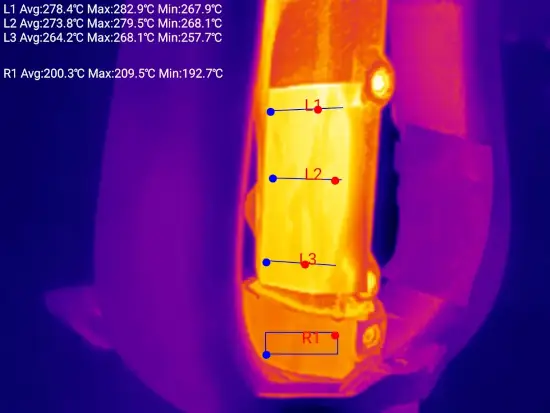
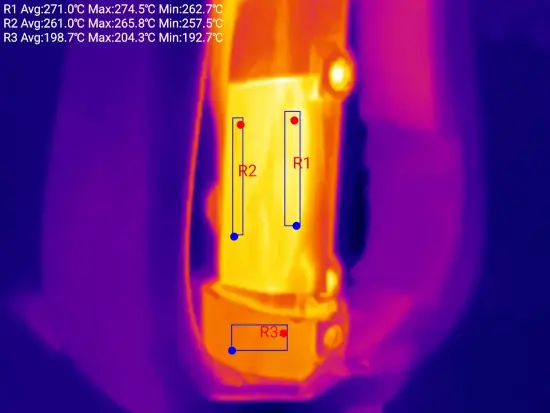
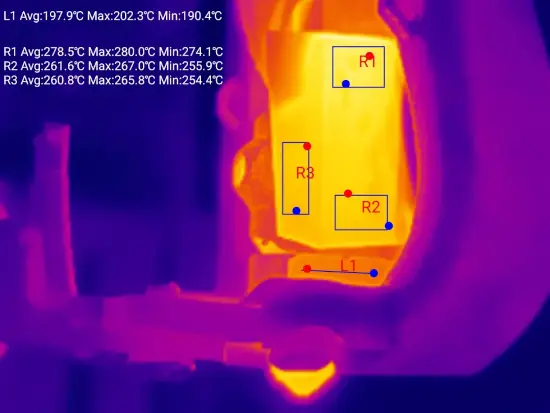
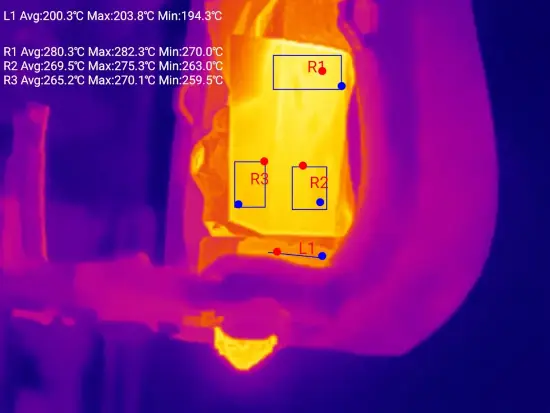
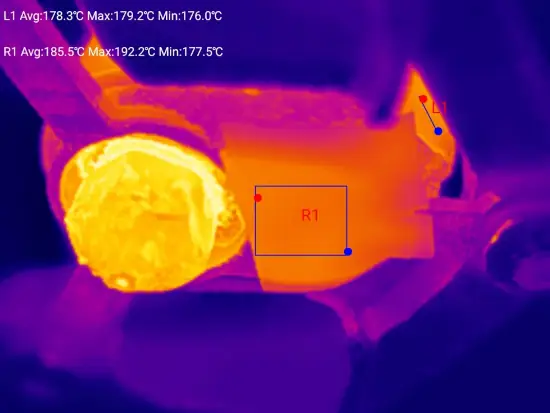
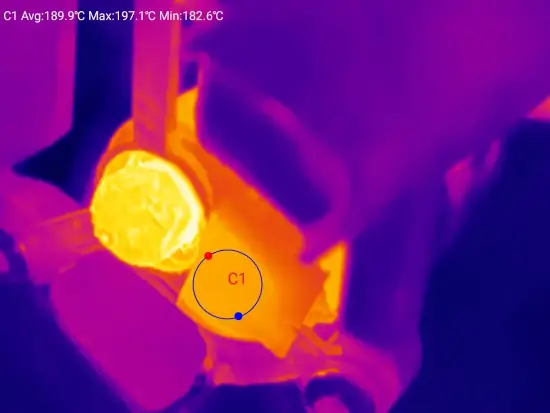
I captured a series of thermal images of the heatblock to better visualize the temperature gradients. The images were taken at ~255°C, with the chamber at ambient temperature and no CPAP cooling. Kapton tape was applied to provide a known reference emissivity value.
For each pair of images, the first was taken during cooldown from 260°C, when the heater was at a lower duty cycle or off. The second shows the system at a more stable temperature.
A clear front-to-back gradient appears, with a sharp demarcation where the cross-section narrows into the melt zone. Within less than a centimeter, the surface temperature differs by about 5°C, implying even larger differences internally.
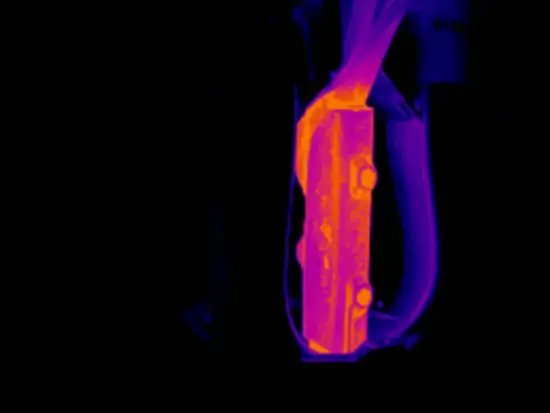
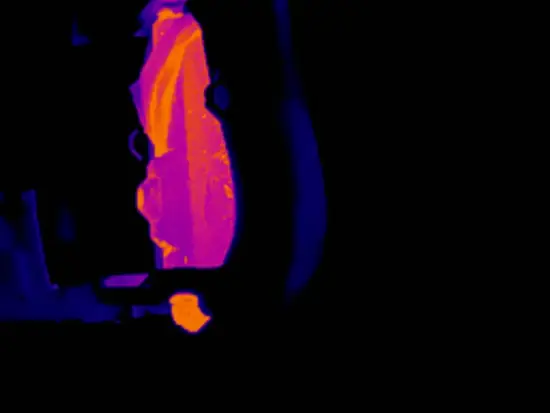
The images also confirm that the supervolcano cartridge heater is non-uniform, heating mainly from the center. This creates a vertical temperature gradient even stronger than the horizontal one, independent of the heat shield (also visible in the high-contrast images taken without the shield and Kapton tape).
The shield reaches about 200°C, but but this is likely because the steel it touches is cooler than the rest of the block due to the steep gradients. It's probably safe to add HT RTV silicone on the outside to minimize the heat losses to the air, especially since the silicone (ideally a very thin film) would also be cooled by the CPAP airflow.
These thermal results give us a clearer picture of how unevenly the heatblock distributes energy. With this data, we can refine both hotend design and insulation strategies to achieve more consistent meltzone temperatures, an essential step toward a more reliable and higher performing hotend